


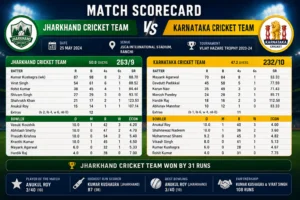
A cricket scorecard can look crowded when you first open it. On sportstatsflow.com, scorecard information can help readers understand what happened during a match beyond simply checking the winning team. Runs, wickets, overs, strike rates, bowling figures, extras, and partnerships all tell different parts of the same game. The useful trick is knowing which numbers deserve attention first, because trying to read everything at once can make a simple match feel surprisingly complicated.
Start With The Batting
The batting section usually gives the quickest picture of how an innings developed. A batter’s runs show personal scoring, while balls faced provide context for that total. Someone making fifty runs from thirty balls has played a very different innings from someone making fifty from seventy balls. Fours and sixes add another layer because they show how much scoring came through boundaries. Dismissal details also matter because they explain how an innings ended. A scorecard can therefore show both the result and the basic shape of a batter’s contribution without needing a long match report.
Strike Rate Needs Context
Strike rate is often noticed quickly in limited overs cricket, but the number needs some context before judging an innings. It measures how quickly a batter scores relative to balls faced, which makes it useful when comparing scoring speed. A high strike rate can indicate aggressive scoring, while a lower figure may reflect a more cautious role. The match situation matters because a batter protecting wickets near the end of an innings has different responsibilities from someone attacking during the final overs. Comparing strike rates without considering balls faced, wickets remaining, and required scoring pace can lead to unfair conclusions about performance.
Partnerships Explain Momentum
Individual batting figures cannot always explain why an innings suddenly improved or slowed down. Partnerships help fill that gap because they show how two batters contributed while sharing the crease. A modest individual score can still be valuable when it forms part of a large partnership. The scorecard may show partnership runs directly, or readers can understand them by following the sequence of wickets and totals. Long partnerships often reduce pressure on the batting side, while frequent wickets can create repeated rebuilding periods. Looking at these patterns gives more meaning to the final team total and shows how the innings actually moved forward.
Wickets Change The Picture
The fall of wickets section can reveal important moments that ordinary batting totals hide. It shows the team score when each dismissal occurred, allowing readers to see whether wickets arrived early, regularly, or near the end. Losing several wickets while the score is still low can put an innings under immediate pressure. A late cluster of dismissals can tell a different story, especially when the team had already built a strong platform. The order of dismissals also helps explain which batters carried the innings and which players entered when the pressure was already high.
Bowling Figures Tell More
Bowling figures provide several numbers that should be read together rather than separately. Overs show how much work a bowler completed, while maidens indicate overs where no runs were conceded. Runs allowed show the scoring pressure created by the batting side, and wickets indicate successful dismissals credited to the bowler. Economy rate brings scoring control into one figure, although the match format still matters. A bowler taking three wickets for many runs has produced a different type of performance from someone taking two wickets while conceding very little. Both can be important depending on the match situation.
Extras Deserve Attention Too
Extras can quietly become a major part of a cricket innings, particularly when the batting team receives many additional runs. Wides and no balls provide runs without being credited to the batter, while byes and leg byes work differently because they are not charged against the bowler in the same way. A large extras total may indicate control problems, pressure, or simply difficult conditions depending on what happened. Checking extras helps readers understand why the team total is higher than the combined runs credited to individual batters. It can also reveal an area where the bowling side gave away avoidable opportunities.
Compare Overs And Phases
Modern limited overs scorecards become easier to understand when innings are divided into broad phases. Powerplay overs usually create different fielding conditions from middle overs, while the final overs often involve greater attacking intent. Comparing runs scored across these periods can show when a team gained momentum or lost control. A side may start carefully, accelerate later, and finish strongly without any single batter dominating the entire innings. Bowling figures can also be considered by phase because certain bowlers may operate mainly during particular periods. This makes scorecard reading more connected to the way limited overs cricket is actually played.
Chasing Requires Different Numbers
A successful chase cannot always be judged simply by looking at the winning team’s total. The required target, wickets remaining, overs used, and scoring rate all affect how convincing the chase was. A team reaching the target with many balls remaining has usually maintained stronger scoring pressure than a team that reaches the same target during the final over. Wickets lost also matter because a chase completed with eight wickets remaining looks different from one completed after most batters were dismissed. The scorecard gives enough information to compare these situations without relying only on the final result.
Compare The Two Innings
Putting both innings beside each other can reveal differences that are easy to miss when viewing one scorecard section alone. A team may score fewer boundaries but still win because it rotates the strike more consistently. Another team may collect many boundaries but lose wickets at important moments. Bowling economy can also explain why one side struggled to build a large total. Comparing runs, wickets, extras, scoring speed, and overs used creates a more complete picture. This approach is especially useful when the final margin looks small, because a close result may have developed through several very different phases.
Scorecards Support Match Review
A scorecard becomes more useful when readers use it to ask simple questions about the match. Which batters created the strongest partnerships, and which bowlers controlled scoring during difficult periods? Did wickets fall in clusters, or did the batting side lose them steadily throughout the innings? Were many runs conceded through extras, and did the chasing team finish comfortably or under serious pressure? These questions turn a collection of numbers into a readable match summary. The scorecard cannot explain every tactical decision, but it provides a reliable statistical base for understanding many important events.
Conclusion
Reading a cricket scorecard properly means looking beyond the largest number displayed on the page. Batting runs, balls faced, strike rates, partnerships, wickets, bowling economy, extras, scoring phases, and chase details all contribute useful information when they are considered together. sportstatsflow.com can help readers explore scorecard details while building a clearer understanding of individual and team performances. Once these sections become familiar, even a busy scorecard starts to feel much easier to follow, and the numbers can reveal how the match developed rather than simply telling you who won.
Read also :-