


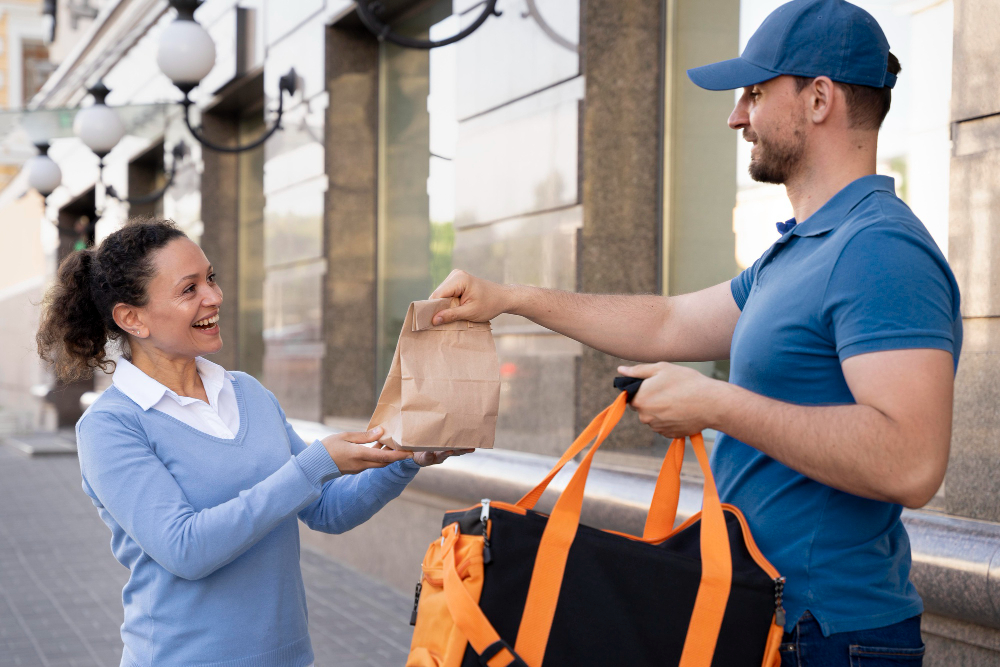
Same-Day Delivery is no longer a luxury—it’s the new standard in 2025. As consumer expectations shift toward instant gratification, businesses across retail, healthcare, and food services are racing to meet the demand for ultra-fast logistics. Whether you’re ordering a last-minute gift or restocking inventory, the ability to receive packages within hours has become a key differentiator.
Back in the early 2010s, next-day delivery was considered cutting-edge. Today, same-day fulfillment is expected, especially in urban markets. With AI-powered route optimization, micro-warehousing, and real-time tracking, logistics providers are making speed a reality.
Technology Is the Backbone of Same-Day Delivery
One of the biggest drivers of Same-Day Delivery is technology. AI and machine learning are used to predict demand, optimize routes, and allocate resources. Companies like Amazon, Flipkart, and Dunzo rely on predictive analytics to ensure packages reach customers within hours.
IoT sensors and GPS tracking allow customers to monitor their parcels in real time. This transparency builds trust and reduces anxiety. A customer in Bengaluru shared how a missed delivery was resolved instantly through app-based tracking and rerouting—without a single phone call.
Retailers are also integrating smart inventory systems that sync with courier networks. When an order is placed, the system checks stock availability, assigns the nearest warehouse, and dispatches the parcel—all within seconds.
Micro-Fulfillment Centers Are Changing the Game
In 2025, Same-Day Delivery is powered by micro-fulfillment centers—small warehouses located near high-demand zones. These centers store fast-moving goods and enable hyperlocal dispatch, cutting down transit time.
A fashion brand in Mumbai uses micro-fulfillment to deliver orders within 3 hours across the city. Their system automatically selects the closest hub, assigns a rider, and updates the customer with a live ETA. This model has reduced delivery costs and improved customer retention.
Even grocery chains are adopting this strategy. Quick-commerce platforms like Zepto and Blinkit operate dark stores that fulfill orders in under 20 minutes. The key is proximity and automation.
Courier Aggregators Are Fueling Growth
Courier aggregators like Shiprocket, Pickrr, and NimbusPost are making Same-Day Delivery accessible to small businesses. These platforms connect sellers with multiple courier partners, allowing them to choose the fastest and most cost-effective option.
A seller in Jaipur uses Shiprocket’s hyperlocal service to deliver handmade products within the city. Orders placed before noon are delivered by evening, boosting customer satisfaction and repeat purchases.
These aggregators also offer real-time tracking, automated NDR handling, and performance analytics—tools that were once limited to enterprise-level logistics.
Healthcare and Food Industries Are Leading Adoption
In 2025, Same-Day Delivery is critical in healthcare and food services. Pharmacies use it to deliver urgent prescriptions, while restaurants rely on it for hot meals and catering orders.
A hospital in Delhi partners with a local courier to deliver medical supplies within hours. The system prioritizes critical items, assigns priority riders, and ensures temperature-controlled transport. This model has improved patient care and reduced emergency delays.
Food delivery apps like Swiggy and Zomato have expanded into grocery and essentials, offering same-day slots for household items. Their logistics networks are optimized for speed, with riders trained in handling perishables and fragile goods.
Sustainability Is Becoming a Priority
While speed is essential, Same-Day Delivery in 2025 is also being shaped by sustainability. Electric vehicles, bicycle couriers, and carbon-neutral delivery options are gaining traction. Companies are balancing speed with environmental responsibility.
A startup in Chennai uses e-bikes for intra-city deliveries, reducing emissions and fuel costs. Their app allows customers to choose eco-friendly delivery modes, which are often faster in congested areas.
Packaging is also evolving. Reusable containers, compostable wraps, and minimalistic designs are being adopted to reduce waste. These choices align with consumer values and regulatory trends.
Read also:
tirupati courier tracking status
तिरुपति कूरियर ट्रैकिंग
tirupati courier tracking online
shipment redirected on same awb